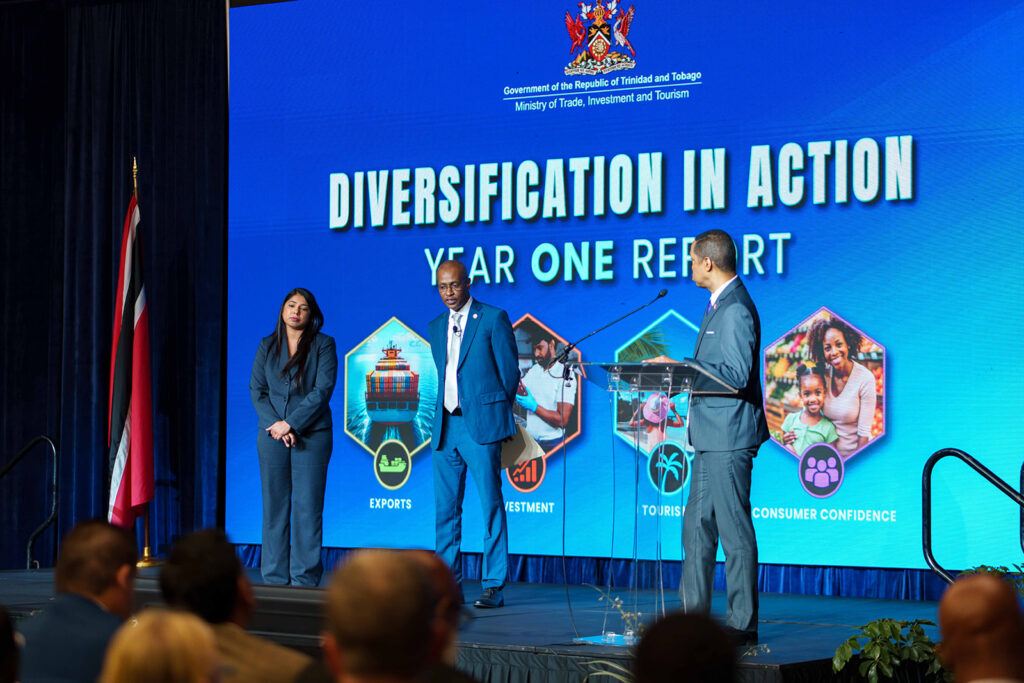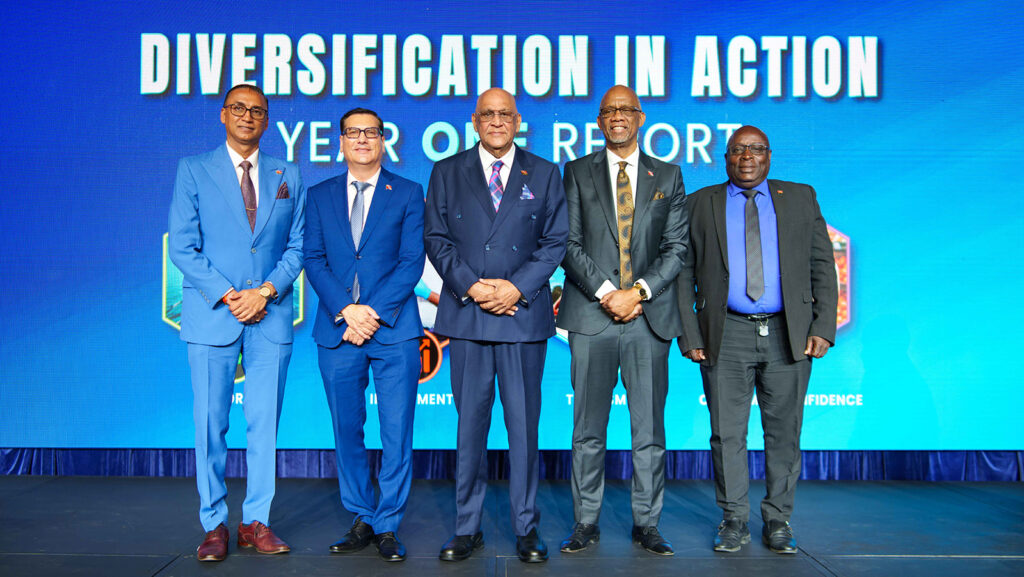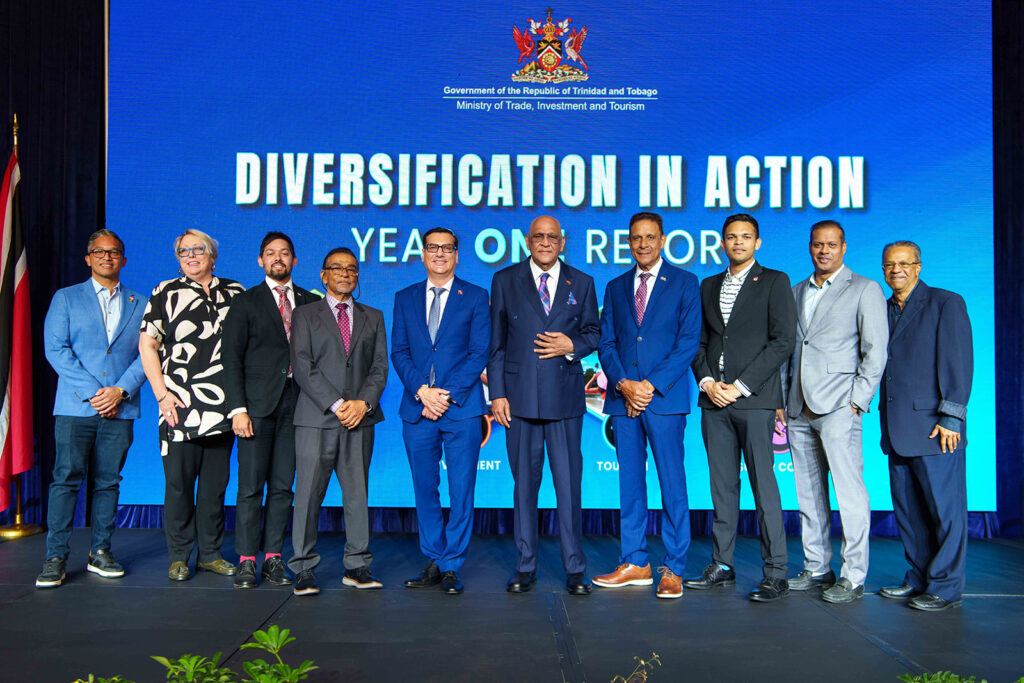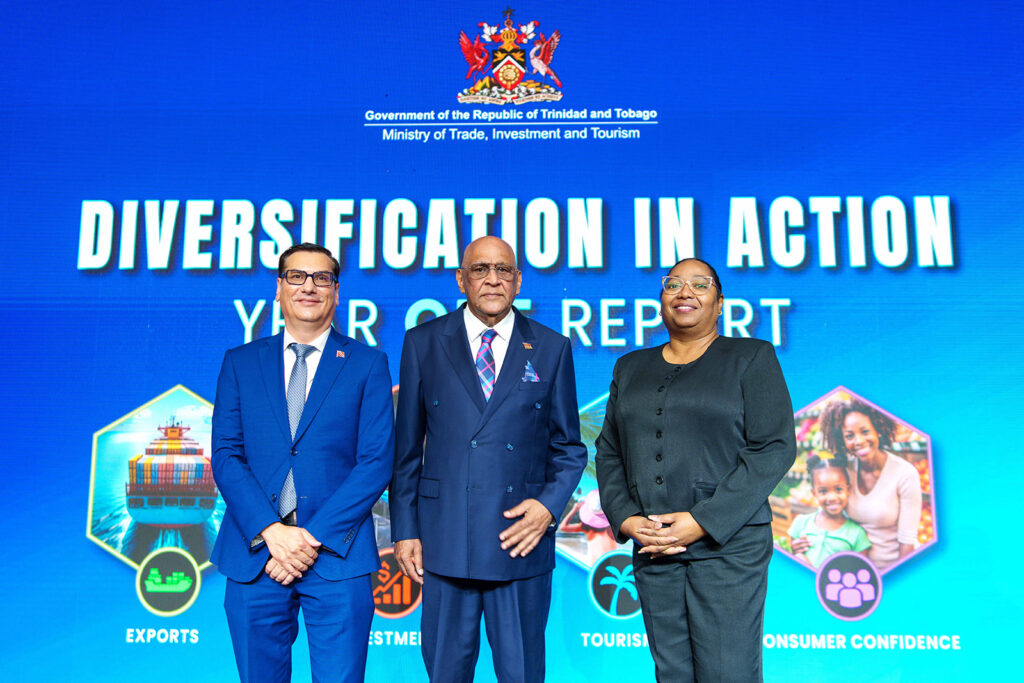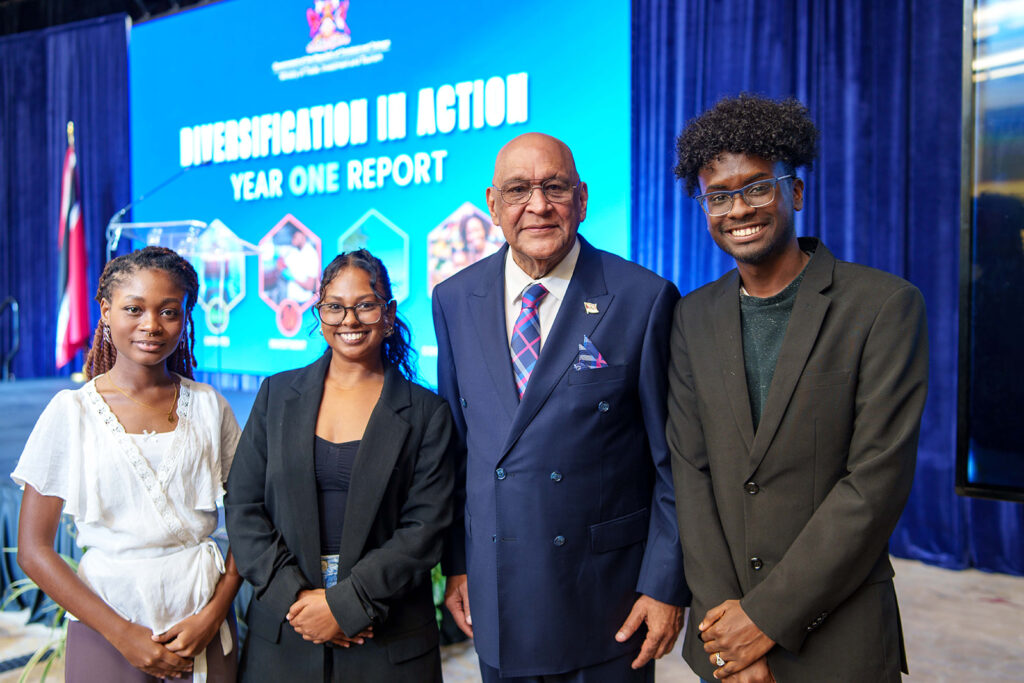


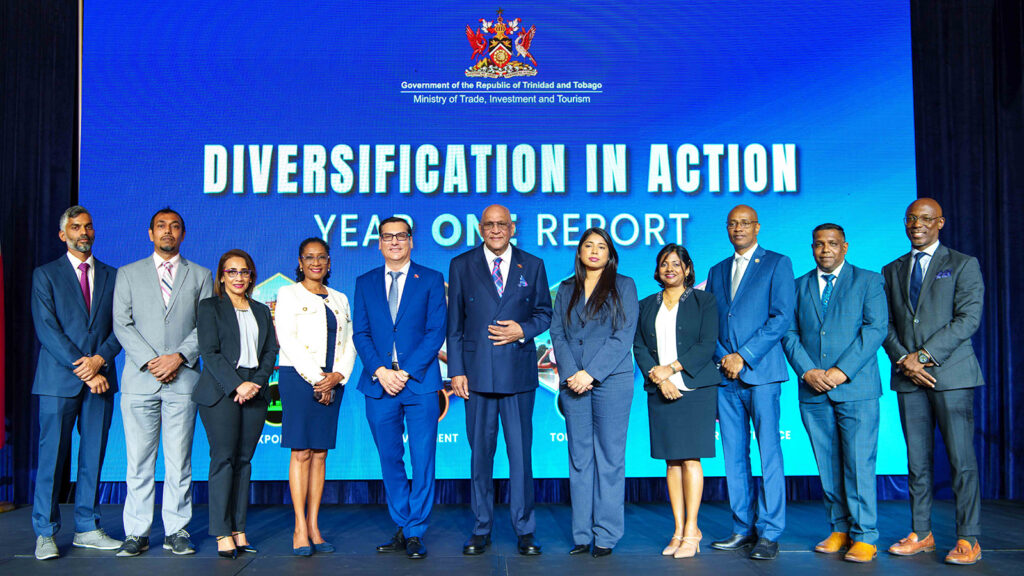
The Ministry of Trade, Investment and Tourism (MTTI) presented its “Diversification in Action – Year One Report”, on Wednesday 27th May 2026, outlining a year of tangible progress, measurable results and structural reforms that are transforming Trinidad and Tobago’s non energy economy.
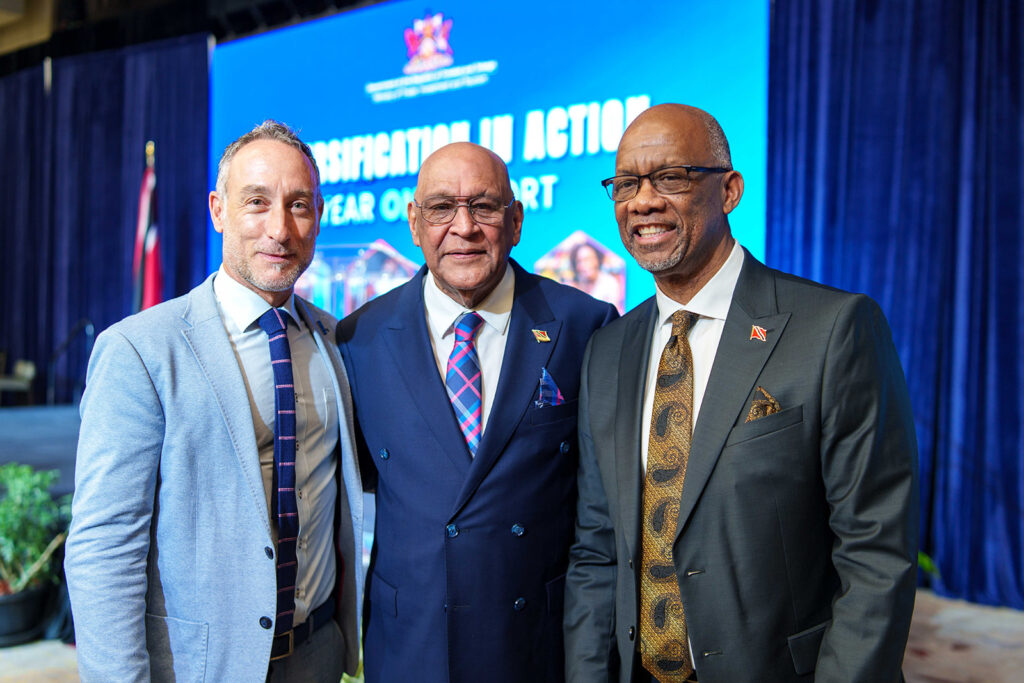
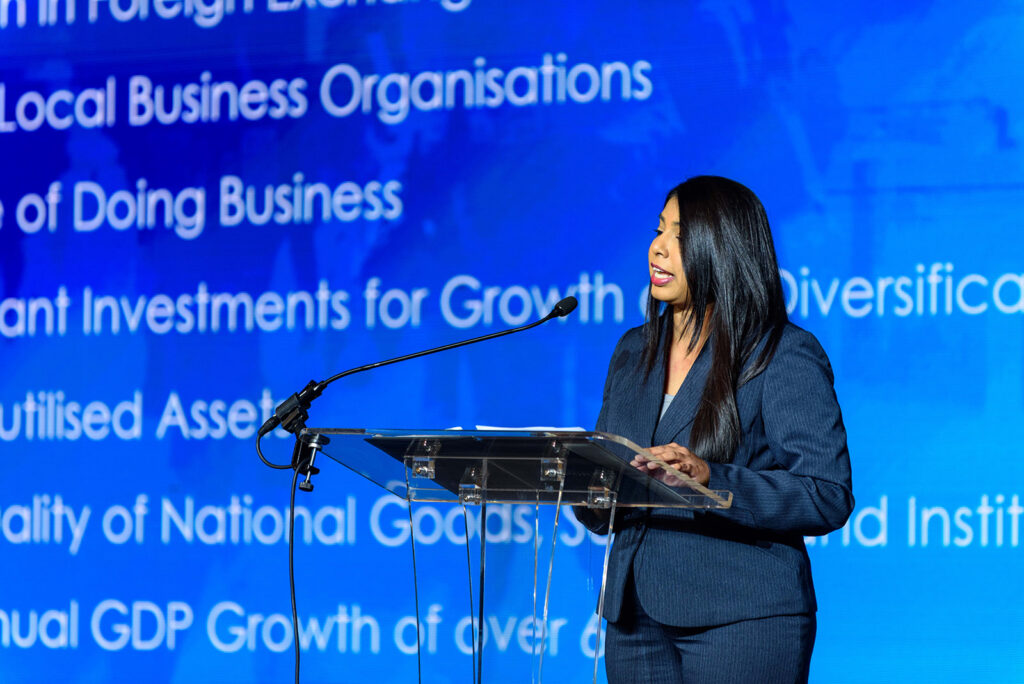
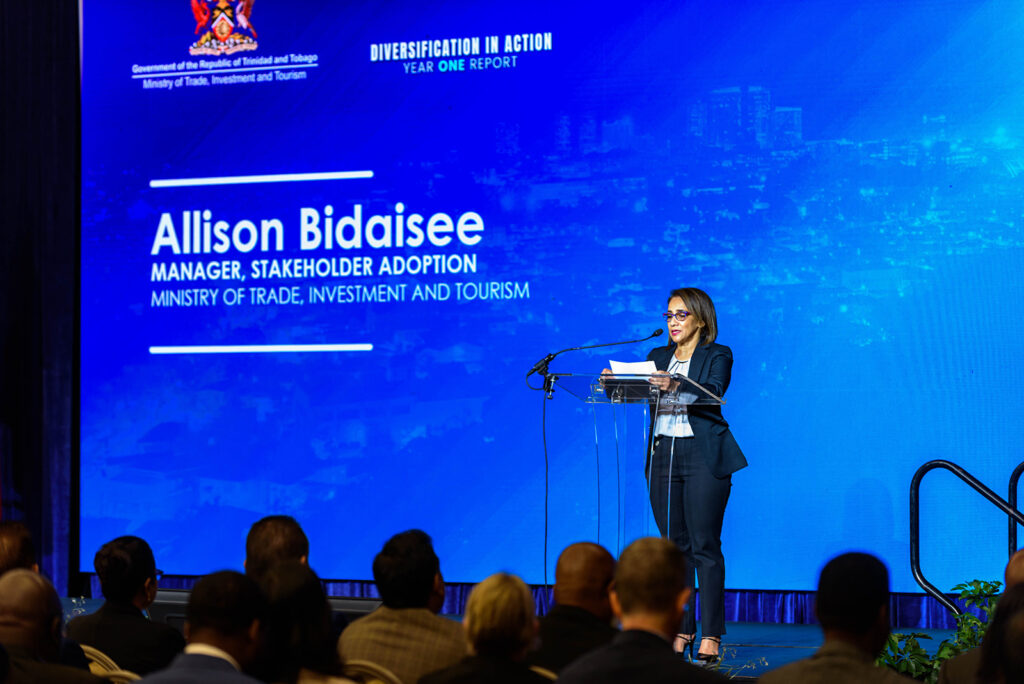
Hosted at the Hyatt Regency Trinidad, the presentation brought together leaders from Government, the private sector, the diplomatic corps, academia, business support organisations, industry associations and the media, reflecting broad national interest in the country’s diversification agenda.
The Report outlined how, over the past year, MTTI has moved decisively from fragmentation to coordination, from discussion to execution, and from ad hoc activity to disciplined, performance driven management.
A New Model of Economic Leadership and Partnership
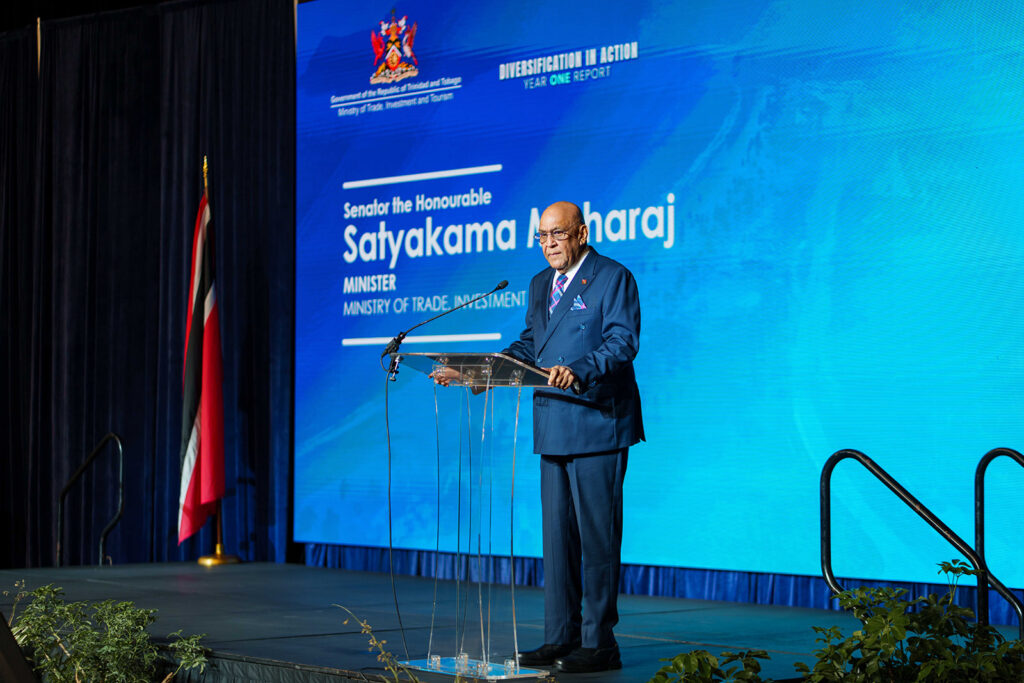
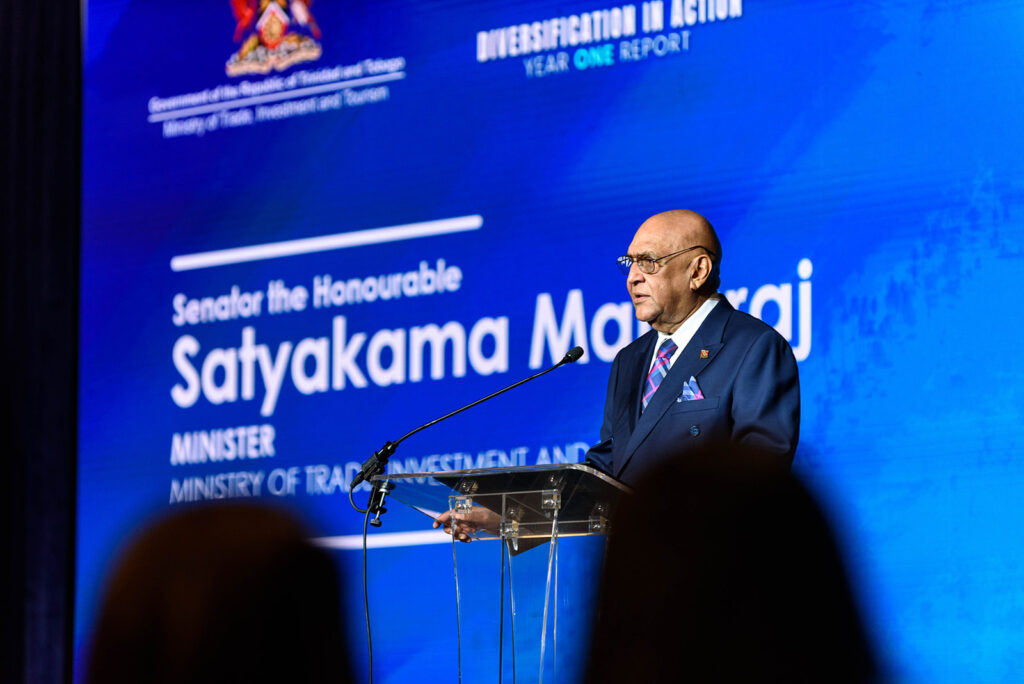
In his remarks, the Minister of Trade, Investment and Tourism, Senator, the Honourable Satyakama Maharaj emphasised that the Ministry’s transformation is rooted in a fundamental shift in how economic development is approached:
- From reaction to strategy
- From isolation to partnership
- From managing the economy to deliberately transforming it
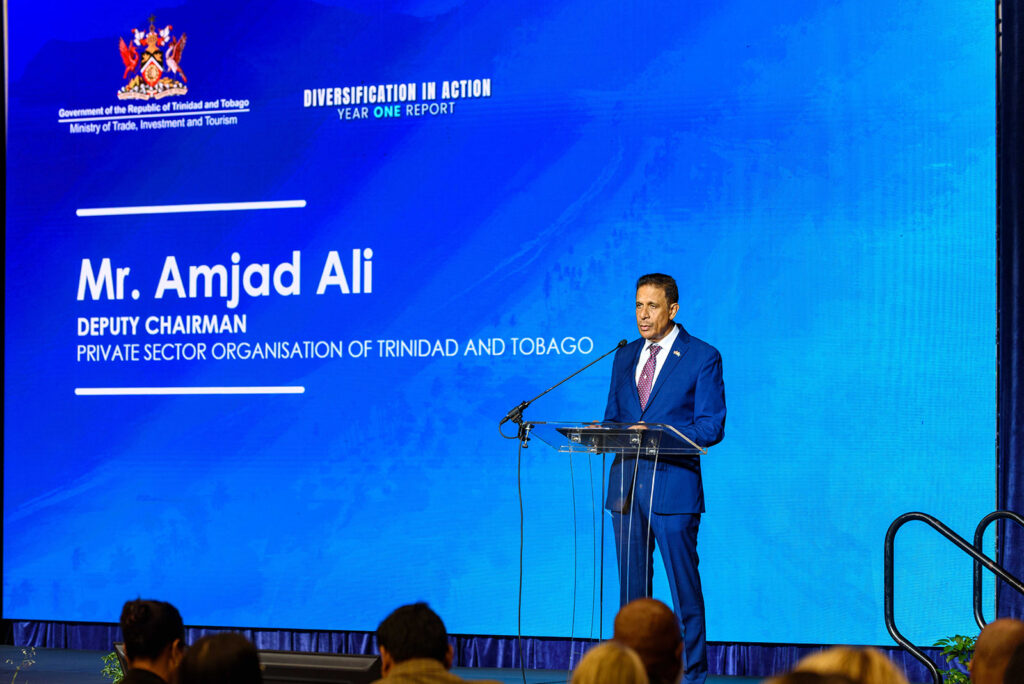
Central to this shift has been the establishment of the Private Sector Organisation of Trinidad and Tobago (PSOTT), the unified national private sector body. Through PSOTT, Government and businesses have begun to operate with stronger alignment, supported by weekly strategic reviews, joint problem-solving and coordinated execution across agencies.
KEY RESULTS AND ACHIEVEMENTS (AS AT MAY 2026)
The Year One Report highlighted major achievements across exports, investment, tourism and institutional reform, demonstrating that transformation is not theoretical, but actively underway.
- Export Growth: Strong Momentum Toward the US$2 Billion Target
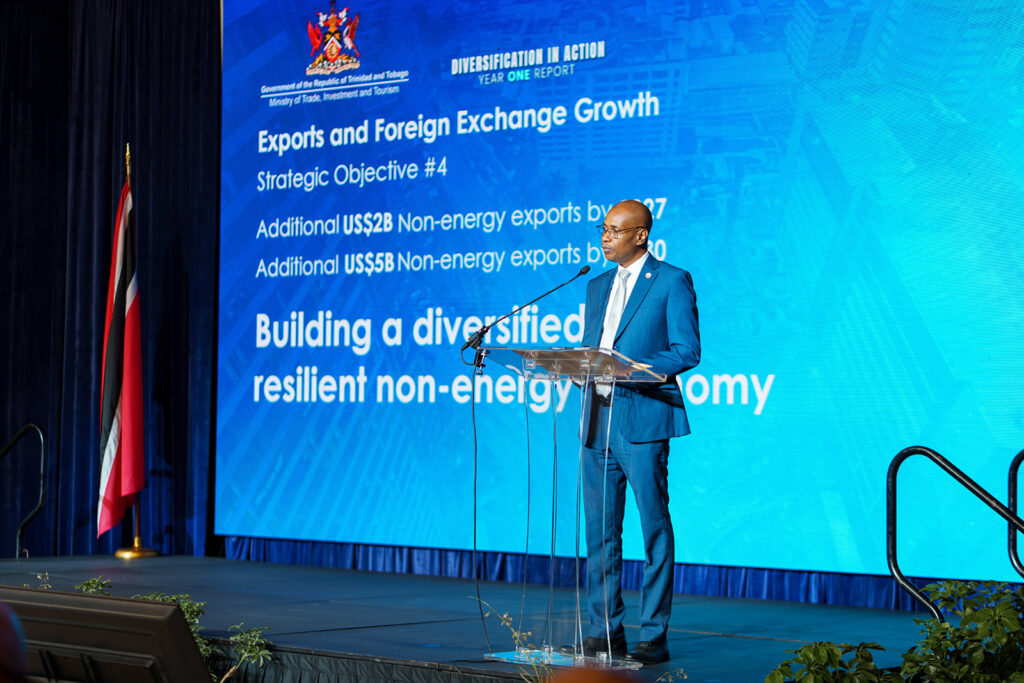
MTTI’s national target is to generate an additional US$2 billion in non-energy exports by 2027.
As at May 2026:
- Non energy exports reached US$848.4 million for the first half of 2025, indicating strong upward momentum.
- structured engagement with the Top 50 exporters, who account for 80% of non energy exports, has positioned this group to contribute US$953 million toward the 2027 target.
- Over 300 products across 18 sectors have been identified for tariff adjustments to improve competitiveness.
- 10 high potential manufacturing sectors have been prioritised for expansion.
- eight key services sectors projected to contribute US$276.7 million in export earnings.
- Investments in the iron and steel sector alone are projected to generate US$200 million annually in exports.
Based on current projections and systems already in place, the Ministry reported that Trinidad and Tobago is on track to achieve the US$2 billion export growth target by 2027.
- Investment: A Growing Pipeline and Early Wins Toward the US$3 Billion Target
MTTI has set a national target of US$3 billion in new investments by May 2027.
As at May 2026:
- The Ministry’s investment pipeline stands at US$1.44 billion, across 47 projects in heavy industry, manufacturing, hotel development, agro technology and other strategic sectors.
- These projects represent over 5,600 potential jobs.
- 61% of the pipeline is foreign direct investment, while 39% is local direct investment.
- Eight projects have already moved into committed status, valued at US$597 million.
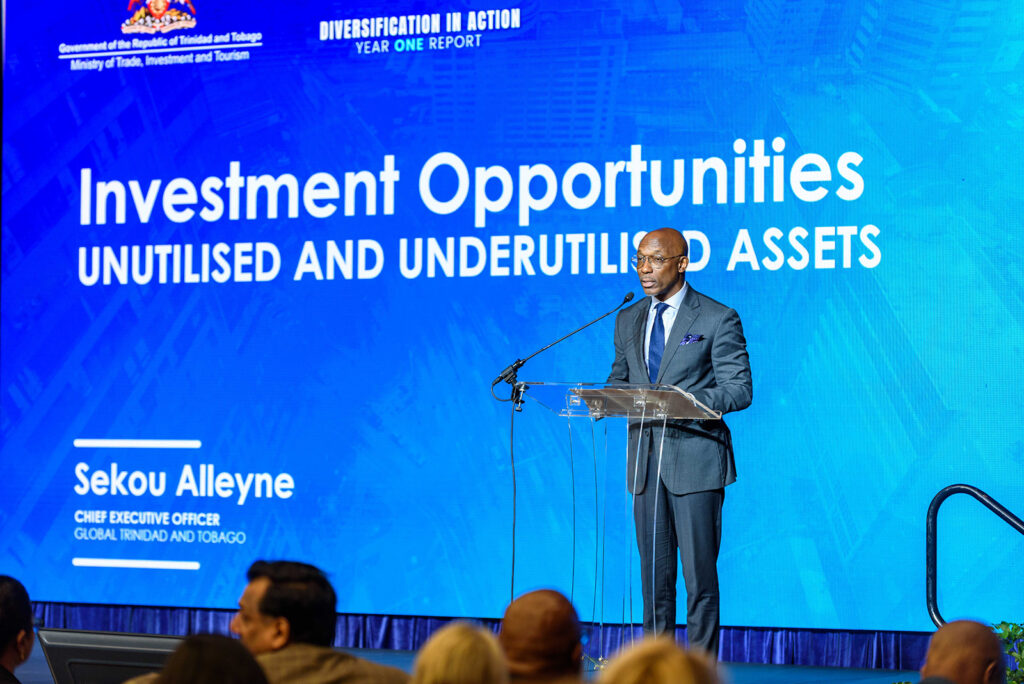
- A national strategy for over 100 underutilised state assets has been launched, with 15 priority assets already shortlisted for investment packaging.
The Ministry noted that its integrated, performance-driven approach, supported by weekly executive reviews and cross-agency coordination, has strengthened investor confidence and accelerated project movement from discussion to execution.
- TOURISM: A Re Engineered Sector with Clear Targets and Measurable Progress
Tourism has long been discussed in Trinidad and Tobago without a clearly defined national strategy. In 2025, the sector contributed approximately 6% of GDP, meaningful, but far below its potential. Over the past year, MTTI has undertaken a clean sheet Tourism Re Think, establishing a structured, product driven, revenue focused approach to sector development.
In delivering the MTTI’s Tourism presentation, Dr. Colin Neil Gosine, Parliamentary Secretary, MTTI explained, the Ministry has set a national target to double tourism’s contribution from 6% to 12% of GDP by 2030, representing US$1.7 billion in economic value. This target is supported by a detailed framework that defines, categorises and prioritises the country’s tourism products and services. Six high-value priority segments have been identified:
- Eco Tourism
- Sport Tourism
- Yachting
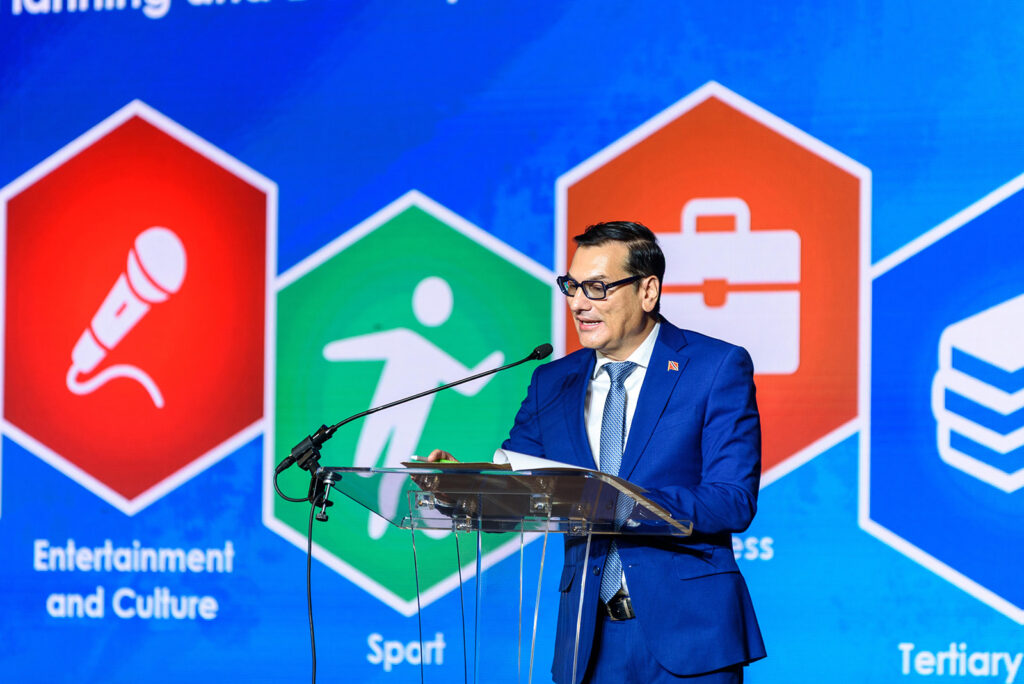
- Entertainment & Culture
- Business Tourism
- Tertiary Health & Education Tourism
Eco Tourism: Over 100 Sites Mapped and Assessed
Eco tourists spend four times more than the average visitor, making this segment a major revenue driver. To date:
- 100+ eco sites across Trinidad and Tobago have been mapped and categorised.
- Each site is being evaluated for desirability, safety, accessibility, sustainability and international competitiveness.
- Flagship sites such as Maracas Beach and the Caroni Bird Sanctuary have been identified as requiring urgent upgrades to meet global standards.
Sport Tourism: Two Immediate High Value Opportunities
Working jointly with the Ministry of Sport and Youth Affairs, two segments have been identified as immediate global market opportunities:
- Cycling — leveraging the National Cycling Velodrome, the first UCI Satellite Centre in the Western Hemisphere.
- Aquatics — anchored by the National Aquatic Centre, one of the Caribbean’s premier competition ready facilities.
These assets position Trinidad and Tobago to attract international events, winter training camps and elite athlete programmes.
Yachting: A Turnaround Already Underway
The Ministry reported that yacht arrivals declined from approximately 2,600 vessels in 2000 to under 800 in 2025, due in part to inefficiencies and outdated processes. Reforms already underway include:
- the SailClear digital clearance system, reducing processing time from approximately four hours to 15 minutes, with launch scheduled for June 2026; and
- a new Port Health Office, reducing clearance time from two days to under two minutes.
These reforms support the national target of doubling yacht arrivals within the first two years and reaching 3,000 vessel arrivals by 2030, with an estimated US$200 million in foreign exchange potential.
Entertainment & Culture: A Structured Industry Approach
For the first time, the Ministry has broken down the Entertainment & Culture sector into its component segments, including Carnival, Culinary Arts, Heritage, Music, Film, Fashion, Visual & Performing Arts, and Gaming. This allows for targeted product development, market segmentation and investment attraction.
Tourism Investment Pipeline
Tourism is now fully integrated into the Ministry’s investment strategy. To date:
- 9 committed tourism accommodation projects
- 577 new rooms
- 741 permanent jobs
- Completion expected by 2027/2028
These investments directly support the 2027 arrivals and revenue targets.
The Ministry confirmed that the sector is on track toward meeting the 2027 tourism growth trajectory, driven by the six priority segments and the Tourism Re Think framework.
A YEAR OF SYSTEMIC REFORM AND NATIONAL ALIGNMENT
Across all areas, the Ministry highlighted several major differentiators that set this year apart:
- Clear objectives and structured implementation
- Measurable accountability and weekly performance management
- Coordinated execution across agencies
- A unified private sector partner in PSOTT
- A national strategy for underutilised assets
- Modernisation of investment, trade and tourism policy frameworks
- A renewed focus on national quality standards
These reforms represent a fundamental shift in how Trinidad and Tobago approaches economic development replacing fragmentation with coordination, and replacing rhetoric with measurable action.
A NATIONAL MISSION OF TRANSFORMATION
The Minister reaffirmed that none of this progress would be possible without the leadership and national vision of the Honourable Prime Minister Kamla Persad Bissessar, whose support has enabled the Ministry to operate with clarity, discipline and purpose.
He emphasised that transformation does not happen overnight, but it does happen when vision becomes action, when planning becomes execution, and when people begin to believe again.
LOOKING AHEAD
MTTI reaffirmed its commitment to:
- Transparency and open reporting
- Continuous engagement with stakeholders
- Strengthening public private partnership
- Accelerating reforms to improve the ease of doing business
- Driving investment, exports and tourism growth
- Building a more competitive, resilient and opportunity rich Trinidad and Tobago
The Ministry concluded with a clear message:
“We are not waiting for the future. We are building it.”